
How to improve referring physician engagement using data
Referral patterns are more than numbers in a report: they can reveal where coordination works and where patients may be leaving the network. To understand how to improve referring physician engagement, start with claims data to identify referral behavior, then discuss the findings and possible changes with physicians. Their decisions shape referrals and the flow of care.
Effective engagement takes more than sharing a dashboard. Physicians need relevant results, a voice in decisions, and support with factors that affect morale and autonomy. This article explains how to use claims data to identify referral patterns and leakage, assess whether changes help, and share findings in ways that encourage productive discussion. It also covers common engagement barriers and how to involve physicians in improvement work grounded in both evidence and clinical experience.
Key Takeaways
- Use claims patterns to focus physician conversations on where referrals are going and where care coordination may be breaking down.
- Make regular meetings two-way: listen to concerns, explain the data behind proposed changes, and report back on actions taken.
- Record feedback and compare relevant measures before and after an improvement so physicians can see what changed and what still needs attention.
- Include physicians in improvement decisions and account for autonomy, workload, and morale when addressing engagement barriers.
1. Why is physician engagement important?
Physician engagement matters because physicians influence referrals, care decisions, and the patient experience. When communication breaks down, an organization can miss referral concerns, coordination gaps, and practical ways to improve outcomes. Engagement gives leaders a route to understand those issues before they shape referral patterns or weaken relationships. To improve referring physician engagement, connect each conversation to a specific concern, decision, or follow-up action.
Make regular meetings useful and two-way. Set an agenda that gives physicians time to raise workflow problems, discuss referral processes, and propose changes. A meeting might, for example, focus on delays in receiving imaging results or difficulty accessing patient records. End by clarifying the next step, who is responsible, and when progress will be reviewed. Following through shows physicians that their input can shape decisions.
Physician liaisons can make conversations more relevant by bringing focused information and listening for recurring concerns. They can explain the organization’s response and connect physicians with the appropriate internal team. Record the issue and requested action, not merely that a visit took place.
Feedback builds trust only when leaders close the loop. Gather comments in meetings, surveys, or another clear channel, then explain what the organization will implement, defer, and why. Share the evidence behind a proposed policy so physicians can assess its purpose. If a suggestion cannot be adopted, explain the constraint and describe any alternative action.
Modernizing communication can reduce friction in everyday coordination. Review how referrals, scheduling updates, and imaging results move between practices. Replace unnecessary manual steps with a clear process, and tell physicians where to direct questions. For example, a shared procedure for reporting missing information can help staff resolve referral issues consistently.
Costs for physician liaison programs and referral management software depend on scope, staffing, capabilities, and integration needs. Pricing is provided after a quote request, with the specific requirements shaping the estimate.
2. Using claims data to identify referral patterns and patient leakage
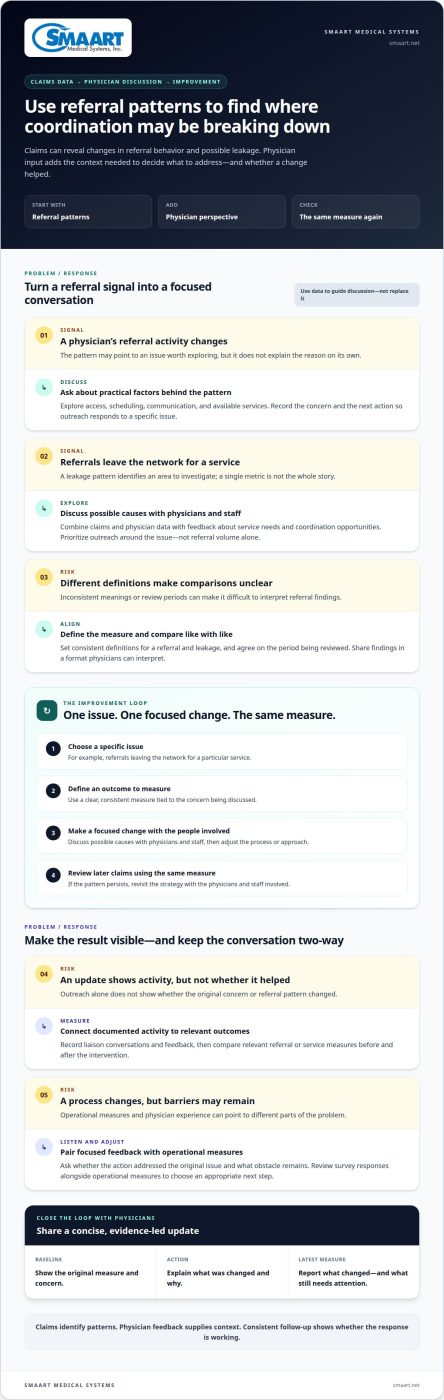
Prioritize outreach by combining referral patterns with practical context. A change in a physician’s referral activity may warrant a conversation about access, scheduling, communication, or available services. Liaison teams can use claims and physician data to tailor discussions, then record the concern and next action. This makes outreach more relevant and helps improvement efforts respond to actual referral behavior.
Turn the data into an iterative quality improvement process. Select one issue, such as referrals leaving the network for a particular service, and define an outcome to measure. Discuss potential causes with physicians and staff, make a focused change, then review later claims using the same measure. If the pattern continues, revisit the approach with the people involved. This connects data to patient care without treating one metric as the whole story.
Turn the data into an iterative quality improvement process. Select one issue, such as referrals leaving the network for a particular service, and define a measurable outcome. Discuss potential causes with physicians and staff, implement a focused change, then review later claims for movement in the same measure. If the pattern persists, revisit the strategy with the people involved. This approach connects data to patient care without treating a single metric as the whole story.
A useful data strategy also makes the organization’s vision clear. Set consistent definitions for a referral, leakage, and the period being reviewed. Compare like with like, and share findings in a format physicians can interpret. Use the results to explain why an initiative matters and what evidence will guide its next step. To see how radiology information workflows can support connected operations, explore the available platform information.
Identify priority physicians by considering referral patterns, service needs, and opportunities to improve coordination. Combine these signals with physician feedback so outreach addresses a specific issue rather than relying on volume alone. This evidence-led approach is a practical step in how to improve referring physician engagement.
Identify priority physicians by considering referral patterns, service needs, and opportunities to improve coordination. Combine those signals with physician feedback so outreach addresses a specific issue rather than relying on volume alone. That evidence-led approach is a practical step in how to improve referring physician engagement.
3. Measuring and sharing results of proposed changes
Use physician surveys to find out whether a change addresses the original concern. Ask focused questions about the issue, the action taken, and any remaining obstacle. After changing how results are shared, for example, ask whether physicians can access them and whether the process fits their workflow. Online forums can offer another channel for specific feedback. Review responses alongside operational measures: positive survey responses and a persistent workflow problem may call for different next steps.
To assess engagement ROI, connect the effort to documented activity and outcomes rather than assuming that more outreach creates value. Record liaison conversations, note the feedback received, and compare relevant referral or service measures before and after the intervention. If the goal is to reduce missing referral details, track whether the issue changes after process adjustments. These findings help leaders decide which initiatives merit continued attention and where to refine the approach.
Share findings directly with the physicians who raised the concern. Provide a concise update showing the baseline, the action taken, and the latest measure. Invite physicians to rate the meeting or explain whether the change helped their work. Administrators can use those comments to improve future discussions. Close the loop by stating what happens next, who owns it, and which measure will be reviewed. This makes evaluation part of the improvement cycle, rather than a report that ends the conversation.
Engagement barriers can be personal, organizational, or systemic, so one intervention will not address every cause. A new digital workflow, for example, may involve a learning curve. Hospital policies or a culture that excludes clinicians from decisions can create different obstacles. Identify the barrier before choosing an action, then involve physicians in developing a response that respects clinical judgment.
4. Physician autonomy, morale, and engagement barriers
Protect physician autonomy by involving clinicians in quality improvement planning and implementation. Invite those who use a referral process every day to map delays and suggest workable changes. Physician committees, leadership roles, and collaborative decisions can give clinicians meaningful influence. Explain the evidence behind proposed changes, so participation informs decisions rather than becoming a formality.
Morale also shapes participation. In Jackson Physician Search’s fall 2020 survey, nearly seven in ten physicians rated themselves as actively disengaged with their employer; 35% of administrators rated their physicians as actively disengaged. The difference highlights why leaders shouldn’t rely only on management impressions. Anonymous surveys can surface concerns about burnout, workload, or support, while follow-up conversations can help develop practical responses.
Common outreach mistakes include sending every physician the same message, assuming referral volume explains a change, and repeatedly contacting clinicians without acting on their feedback. These approaches can weaken trust and overlook barriers involving access, workflow, or communication. Tailor each conversation to a specific need, record agreed actions, and follow up on the concern raised.
Common referral outreach mistakes include using the same message for every physician, assuming referral volume explains a change, and repeatedly contacting clinicians without addressing their feedback. These approaches can weaken trust and overlook barriers such as access, workflow, or communication. Tailor each conversation to a specific need, record agreed actions, and follow up on the concern raised.
Provider engagement also depends on how the wider organization responds. If physicians identify a burden but see no action, confidence in future surveys and meetings can erode. Share what leaders will change, explain constraints, and report progress. To support more connected radiology workflows, explore workflow modernization options.
SMAART Medical Systems
SMAART Medical Systems, Inc. offers radiology management software that can support more connected workflows between hospitals, clinics, and referring physicians. When communication gaps involve imaging operations or sharing radiology information, its solutions may fit the organization’s improvement plans.
SMAART-PACS and SMAART-RIS are designed to integrate with existing EMR and HIS platforms, helping fit radiology workflows into established systems. SMAART-SHARE provides a cloud-based sharing platform. Together, these offerings give healthcare organizations options to consider as they modernize imaging management and information sharing. The right next step is to map the workflow challenge, the systems involved, and the information physicians need to access or exchange.
For a conversation about radiology software options for your organization, contact SMAART Medical Systems, Inc.
Build engagement into the next improvement cycle
A practical approach to how to improve referring physician engagement is to treat each change as a working agreement: clinical teams explain what they need, operational teams clarify what can change, and leaders make the next decision transparent. This keeps the focus on real workflow challenges while respecting physicians’ role in shaping care.
A practical approach to how to improve referring physician engagement is to treat each change as a working agreement: clinical teams explain what they need, operational teams clarify what can change, and leaders make the next decision transparent. This keeps the focus on real workflow challenges while respecting physicians’ role in shaping care.
If your organization is reviewing how radiology systems support coordination and information exchange, contact SMAART Medical Systems, Inc. to discuss your workflow priorities. A focused next step can turn shared intent into steady progress.
Frequently Asked Questions
Why is physician engagement important?
Referring physician engagement means maintaining a working relationship with clinicians who direct patients to another provider or service. It involves understanding the information they need, clarifying referral pathways, and responding to concerns about the process. A referring clinician, for instance, should know how to send relevant records and where to ask about a patient’s next appointment. The relationship continues after the referral.
What does referring physician engagement mean in healthcare?
Effective strategies make referral relationships useful in daily practice, not just during outreach. Tailor communication to each practice’s needs, clarify how to submit referrals, and provide a reliable route for questions. A physician new to a practice, for example, may benefit from a concise introduction to referral contacts and processes. Apply feedback to improve those steps, then communicate the changes to affected clinicians.
What are the most effective strategies to improve referring physician engagement?
Improve coordination by defining what information should accompany a referral and who handles each handoff. A practical process identifies the receiving service, the records needed, and who communicates follow-up instructions. If a referral arrives without relevant imaging, for example, staff need a clear way to request it and update the referring office. Consistent handoffs can reduce avoidable back-and-forth and keep patient care moving.
How can referral communication and care coordination be improved?
Digital tools can support different parts of radiology coordination. A radiology information system can manage patient data and clinical scheduling, while a PACS stores and distributes medical images. A cloud-based sharing platform supports image sharing and collaborative viewing. SMAART Medical Systems, Inc. offers SMAART-RIS, SMAART-PACS, and SMAART-SHARE for these workflows. Physician engagement still depends on responsive communication and processes suited to clinical teams.
What digital tools help manage physician referrals and engagement?
Choose measures that reflect both referral activity and the clinician’s experience. Track referral completion, whether required records accompany referrals, time from referral receipt to scheduling, and feedback about communication clarity. A brief satisfaction survey can ask whether the receiving service was easy to reach and whether follow-up information met the practice’s needs. Review the measures together, since a completed referral alone may not reveal coordination problems.
What metrics measure referring physician engagement and referral satisfaction?
Use measures that reflect both referral activity and the clinician’s experience. Track referral completion, the proportion of referrals with required records, time from referral receipt to scheduling, and feedback about communication clarity. A short satisfaction survey can ask whether the receiving service was easy to reach and whether follow-up information met the practice’s needs. Review these measures together, since a completed referral alone may not reveal friction in coordination.