Ways to Reduce Patient Wait Times in Radiology Through Better Flow
Long waits are often a flow problem, not simply a shortage of scanners. A practical answer to how to reduce patient wait times in radiology is to make scheduling, check-in, preparation, imaging, and updates work as one consistent process. Clear expectations and timely reminders can help patients arrive ready and feel informed when delays occur.
That matters because waiting feels harder when patients don’t know what to expect. A radiology workflow covers the steps from appointment booking through the imaging visit, and gaps between those steps can disrupt the day for patients and staff alike.
This article explains how consistent workflows, realistic wait-time updates, expanded appointment hours, and automated reminders can support smoother patient flow. You’ll find practical ways to address delays without assuming every problem requires more equipment or longer shifts.
Key Takeaways
- Standardize scheduling and imaging steps to reduce workflow disruptions and keep patient flow more predictable.
- Set clear expectations and share timely updates so patients know what to expect when delays occur.
- Review appointment patterns to see whether expanded hours or additional slots could ease bottlenecks.
- Use reminders and clear preparation instructions to help patients arrive ready for their imaging appointment.
1. Reducing internal and external variability
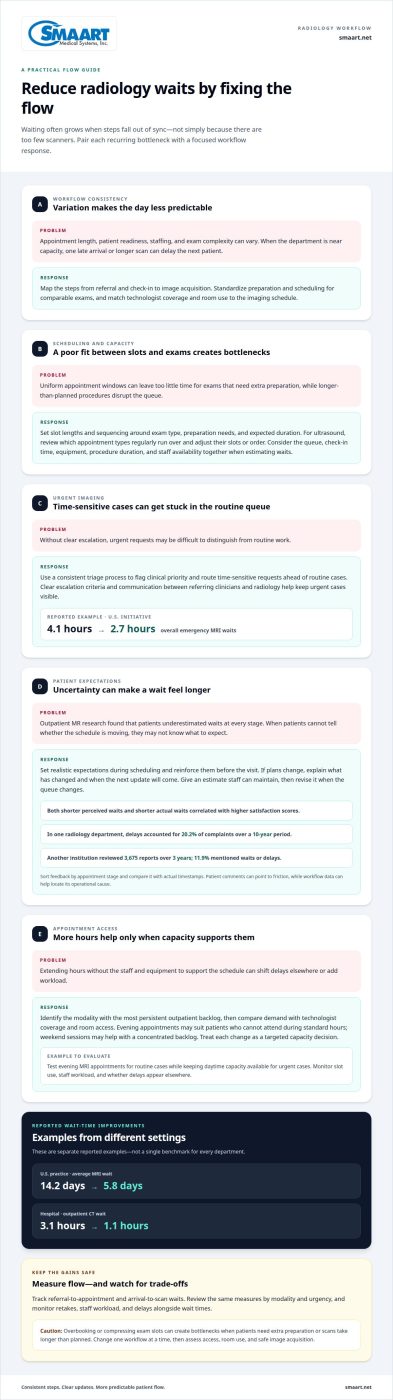
Radiology waits grow less predictable when appointment lengths, patient readiness, staffing, and exam complexity vary throughout the day. When a department operates near capacity, even a late arrival or longer scan can delay the next patient. Teams deciding how to reduce patient wait times in radiology can map each workflow step, from referral and check-in to image acquisition, then standardize preparation and scheduling for comparable exams. This reduces avoidable variation without treating every delay as a need for more equipment.
Improve staffing and room use by matching technologist coverage to the imaging schedule and distributing work across available rooms. Consider the queue, procedure duration, check-in time, equipment, and staff availability together when estimating waits. For ultrasound, review which appointment types regularly run over, then adjust slot lengths or sequencing. This gives staff a practical way to reduce backlogs while protecting time for complex exams.
For urgent imaging, use a consistent triage process that flags clinical priority and routes time-sensitive requests ahead of routine work. Emergency MRI prioritization reduced overall waits from 4.1 hours to 2.7 hours in a U.S. initiative. In emergency departments, clear escalation criteria and communication between referring clinicians and radiology help prevent urgent cases from being lost in the routine queue.
Measure waits at defined points, such as referral-to-appointment and arrival-to-scan, then review the same measures by modality and urgency. Set benchmarks from the department’s baseline and monitor whether changes improve patient care without shifting delays elsewhere. There isn’t one typical U.S. wait time for every modality: urgency, staffing, capacity, and local demand affect access. One U.S. practice reduced average MRI waits from 14.2 days to 5.8 days; a hospital reduced outpatient CT waits from 3.1 hours to 1.1 hours.
Faster flow involves trade-offs. Overbooking or compressing exam slots can create bottlenecks when patients need extra preparation or scans take longer than planned. Review retakes, staff workload, and delays alongside wait times. For ultrasound and MRI, change one workflow at a time, then assess its effect on access, room use, and safe image acquisition. Knowing how to reduce patient wait times in radiology means evaluating these outcomes together.
Patient satisfaction and wait-time expectations
A wait feels longer when patients cannot tell whether the schedule is moving. Research on outpatient MR found that patients underestimated waits at every stage of the encounter. This connects perceived wait time with communication, not just the minutes on the clock. Both shorter perceived waits and shorter actual waits correlated with higher satisfaction scores. Build trust by setting realistic expectations and updating patients when plans change.
Patient feedback shows how strongly delays shape the imaging experience. In one radiology department, delays accounted for 20.2% of complaints over a 10-year period. Another institution reviewed 3,675 reports over 3 years; 11.9% mentioned waits or delays. These figures make feedback useful for locating friction, but comments alone don’t explain its cause. Sort feedback by appointment stage, such as check-in, preparation, or rooming, then compare patterns with actual timestamps.
Set expectations during scheduling and reinforce them before the visit. The CMS CAHPS survey asks how often patients saw their provider within 15 minutes of appointment time during the last 6 months. That measure concerns provider visits, not radiology access, but it illustrates how clearly patients notice timing. Give patients a practical arrival and preparation plan, then explain what staff will communicate if the schedule changes. Physicians and imaging staff can use consistent language to avoid conflicting estimates.
During a delay, share what has changed and when the next update will come. A patient deciding whether to wait needs useful information, such as whether the delay is 10 minutes or longer. Avoid unsupported precision; provide an estimate staff can maintain, and revise it when the queue changes. In addition, record whether updates reached patients and whether appointments started close to schedule. Implementing a simple feedback review can reveal whether clearer communication improves satisfaction, while workflow data points to operational causes. Teams refining patient communication can explore radiology workflow software as part of a broader efficiency effort.
3. Evening shifts and expanded appointment slots
Longer operating hours can create appointment opportunities without adding imaging rooms, but staffing and equipment must support the schedule. First identify which modality has the most persistent outpatient backlog, then compare demand with technologist coverage and room access. Evening appointments may work for patients who cannot attend during standard hours; weekend sessions may help with a concentrated backlog. Treat each change as a targeted capacity decision, not an automatic extension for every service.
Optimize scheduling templates by grouping appointments according to modality, exam type, preparation needs, and expected procedure duration. Set slot lengths based on the department’s workflow patterns rather than giving every patient the same window. Protect time for exams that often need extra preparation, and place shorter, predictable procedures where they fit. Review unused gaps and recurring overruns before changing the template. This improves room use and reduces the risk that one late exam disrupts the rest of the schedule.
For example, a department could test evening MRI appointments for routine cases while keeping daytime capacity available for urgent cases. Monitor whether patients use the added slots and whether the new schedule affects staff workload or creates delays elsewhere. Share filled appointments, cancellations, and start-time patterns with the team. Automated scheduling can help staff identify open times, but templates still need to reflect exam requirements and available coverage.
Expanded hours work best when they address a specific access problem. Identify which patients can use later appointments, then align staff, equipment, and preparation processes with those slots. Weekend sessions may help with a backlog, while longer weekday hours may suit patients who need evening access. After implementation, review outpatient waits, cancellations, and staff workload. These measures show whether added hours improve access sustainably or simply shift pressure into the evening.
4. Patient communication and automated reminders
Waiting becomes harder when patients don’t know whether to prepare, check in, or expect a delay. Radiology departments can reduce uncertainty by sending appointment reminders with clear preparation instructions and arrival guidance. Timely messages help patients review what they need before imaging instead of discovering missing information at check-in.
Online check-in and patient registration move routine information gathering ahead of the appointment. Patients can provide or confirm details before arriving, allowing staff to identify missing information earlier and focus on remaining tasks at check-in. Clear registration processes won’t eliminate every source of waiting, but they can prevent avoidable administrative steps from holding up the imaging workflow.
Communication should continue after the reminder. If the schedule changes, tell patients what is happening and when they can expect another update. A useful estimate should answer the practical question: is the delay about 10 minutes, or longer? If the queue shifts, revise the estimate rather than leaving patients to guess. Consistent updates support the patient experience even when the department can’t immediately eliminate the delay.
Make each message specific to its purpose. An appointment reminder can include the date, time, arrival instructions, and preparation steps. A delay message can explain the current wait and say when the next update will arrive. A follow-up message can direct patients to the appropriate process for accessing images and reports. Consistent wording across providers and radiology teams helps prevent conflicting instructions.
Track whether reminders reach patients and whether registration details are complete before arrival. Compare those measures with check-in delays and missed appointments to find gaps in the communication process. Imaging wait-time estimates can also be calculated for each patient and shared with staff or patients. To strengthen these communication processes, explore radiology workflow solutions that support connected operations.
SMAART Medical Systems, Inc.
SMAART Medical Systems, Inc. provides radiology management software for hospitals and clinics seeking more coordinated imaging workflows. SMAART-PACS and SMAART-RIS are designed to integrate with existing EMR and HIS platforms. SMAART-SHARE is a cloud-based image-sharing platform.
These tools can help departments coordinate scheduling, imaging information, and image sharing. Software can support connected workflows, while staffing and appointment capacity still require operational planning.
Contact SMAART Medical Systems, Inc. to discuss your radiology workflow needs.
Make Better Flow an Ongoing Priority
A lasting approach to reducing patient wait times in radiology treats access as an ongoing operational priority, not a one-time fix. Choose a pressure point that matters to patients and staff, decide who will monitor it, and assess whether changes improve the full visit rather than just one step. A shorter queue has limited value if preparation becomes rushed or delays simply move elsewhere.
Use patient feedback alongside workflow measures to guide the next adjustment. If patients remain uncertain, improve the information they receive. If appointment access is still tight, reassess how capacity aligns with demand. Small, deliberate changes give teams a clearer path to steady improvement while keeping patient care in focus.
For support aligning radiology operations with connected software, contact SMAART Medical Systems today. A more predictable imaging experience can begin with one practical next step.
Frequently Asked Questions
What is a Radiology Workflow?
A radiology workflow is the sequence of tasks that moves an imaging request from referral to completed examination and report. It can include order entry, scheduling, preparation, registration, image acquisition, interpretation, and result distribution. Mapping these handoffs helps departments identify where information or work stalls. For example, a referral without exam details may need clarification before staff can schedule an appropriate appointment.
What are the most effective strategies to reduce patient wait times in radiology?
The most effective changes target a specific bottleneck rather than adding capacity across the board. Review timestamps from referral to appointment and arrival to scan, then compare delays by modality, exam type, and urgency. If preparation causes late starts, clarify instructions before the visit. If a modality’s schedule remains full, assess staffing and appointment capacity. Track patient waits and workflow performance together to ensure that improvements at one stage don’t shift delays elsewhere.
What role do AI, automated scheduling, and patient reminders play in reducing radiology wait times?
AI tools can support image interpretation, while automated scheduling can help organize appointments and available capacity. Their value depends on how well they fit the department’s processes; automation doesn’t replace clinical prioritization or resolve staffing shortages. Reminders can provide appointment details and preparation instructions before arrival. For example, clear preparation instructions may prevent a visit from being delayed because a patient arrived unprepared.
What patient communication practices help manage delays in radiology?
Give patients clear, consistent updates when appointment timing changes. Explain the current estimate in plain language, say when they’ll receive another update, and revise the estimate if circumstances change. Avoid precise promises the schedule can’t support. Staff should use consistent messages across check-in and imaging areas so patients aren’t given conflicting information while waiting for an examination.