
Cloud Native PACS Architecture: A Strategic Guide to Modern Radiology Infrastructure
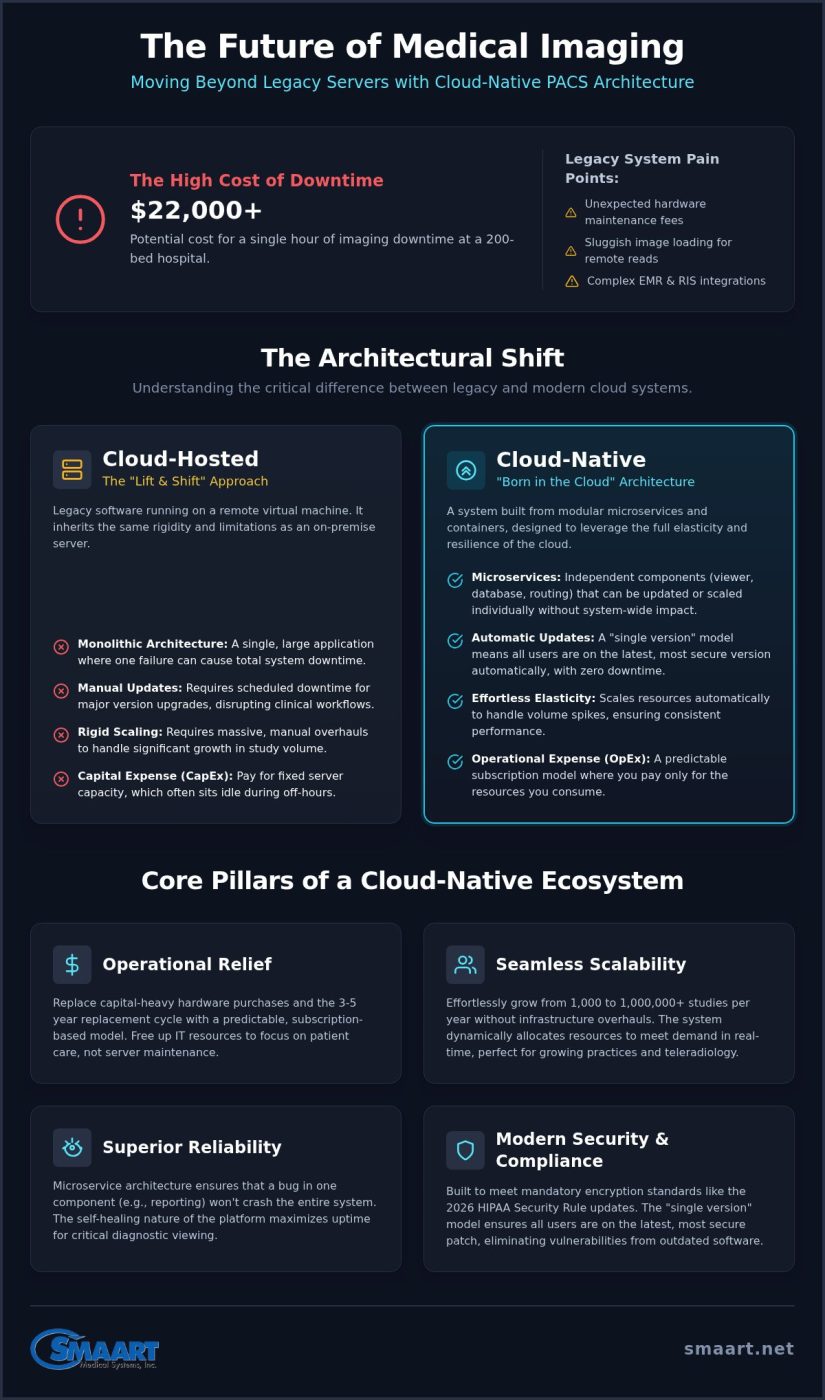
Did you know a single hour of imaging downtime for a 200-bed hospital can cost upwards of $22,000? For clinics still tethered to aging local servers, this isn’t just a technical risk; it’s a mounting financial drain. Transitioning to a true cloud native PACS architecture is no longer a luxury for the few. It’s a strategic necessity for any modern practice aiming to stay competitive and secure in 2026. You’ve likely felt the frustration of sluggish image loading during remote reads or the sting of unexpected hardware maintenance fees. It’s exhausting to manage complex EMR integrations while trying to maintain your primary focus on patient care.
This guide shows you how to reclaim your time and your budget. You’ll discover how a modern architecture eliminates hardware dependency, scales your workflows effortlessly, and slashes operational overhead. We’ll break down the critical differences between cloud-native and cloud-hosted systems, explore the mandatory encryption standards of the 2026 HIPAA Security Rule updates, and outline a path to predictable, subscription-based pricing that supports your clinic’s long-term growth.
Key Takeaways
- Understand the fundamental shift from rigid, monolithic software to modular microservices designed specifically for the cloud environment.
- Learn how a true cloud native PACS architecture uses containerization to provide superior agility and reliability compared to traditional cloud-hosted virtual machines.
- Discover how API-first design principles enable seamless, real-time integration with your existing EMR and RIS to streamline diagnostic workflows.
- Identify the strategic steps for a phased migration that protects clinical continuity while accurately assessing your practice’s data volume and egress needs.
- Explore how SMAART-PACS delivers operational relief by replacing capital-heavy hardware with a predictable, subscription-based model.
What is Cloud Native PACS Architecture?
A true cloud native PACS architecture represents a fundamental departure from traditional imaging software. Instead of installing a massive, singular application on a local server, developers build cloud-native systems as a collection of modular microservices. This means the viewer, the database, and the routing tools all operate independently. If one component needs an update, the rest of the system stays online. This shift offers immediate relief to clinical administrators who are tired of the constant cycle of hardware refreshes and the looming threat of server failure. It’s about moving from a reactive IT posture to one of modern efficiency.
The Evolution from On-Premise to Cloud-Native
Legacy systems often created data silos, making it difficult to share studies across multiple sites. Many providers now offer a “lift and shift” approach, but this is merely hosting old software on a remote virtual machine. It doesn’t solve the underlying rigidity of the code itself. By 2026, the industry standard for high-availability imaging requires systems to be resilient and self-healing. A Picture Archiving and Communication System (PACS) that is truly cloud-native can automatically spin up new resources during volume spikes. This ensures that a sudden influx of ER cases won’t slow down your radiologists or cause system lag.
Why Architecture Matters for Clinical Outcomes
Clinical outcomes depend on speed and reliability. By using global load balancing, a cloud-native system delivers images from the data center closest to the user, which significantly reduces latency for remote readers. Microservices ensure that a bug in the reporting module doesn’t take down the diagnostic viewer, maintaining uptime when it matters most. Simply put, a cloud-native PACS is a system born in the cloud to leverage its inherent elasticity. This architecture allows clinics to scale their imaging volume without purchasing a single new server or hiring more on-site IT staff. It replaces capital-intensive hardware with a fluid, responsive environment that grows alongside your practice.
Adopting this modern framework means you no longer have to worry about the three to five year hardware replacement cycle. You gain the freedom to focus on diagnostic accuracy while the infrastructure handles the heavy lifting of data management and security. It’s a strategic move that aligns your clinical needs with the best that modern technology has to offer.
Cloud-Native vs. Cloud-Hosted: Understanding the Structural Difference
Many imaging directors assume that moving to the cloud simply means migrating their existing server to a remote data center. This is a common misconception. A cloud-hosted system is often just legacy software running on a remote virtual machine. It carries the same technical baggage as your local server, including manual updates, rigid resource limits, and complex VPN requirements. In contrast, a cloud native PACS architecture uses modern containers, often managed by Kubernetes, to break free from these constraints. This structural difference is the foundation of true cloud-hosted vs. cloud-native performance.
One major relief of native architecture is the “single version” model. You’ll never have to schedule weekend downtime for a major version upgrade again. Every user operates on the latest, most secure patch automatically. This also changes the financial math for your practice. Instead of paying for a fixed server that sits idle during off-hours, you pay for the resources your imaging volume actually consumes. It shifts your IT costs from a rigid capital expense to a fluid operational model that matches your actual revenue.
Scalability and Elasticity in Imaging
Imagine your practice grows from 1,000 studies per month to 1,000,000 per year. A legacy hosted system would require a massive, manual infrastructure overhaul to handle that load. A cloud-native ecosystem handles this growth effortlessly by scaling microservices in real time. This agility is vital for modern teleradiology. Remote radiologists need instant access without the lag of a traditional remote desktop. Using a zero footprint PACS viewer ensures that diagnostic tools are available in any browser, anywhere, with zero local installation. This setup provides a seamless experience for multi-site clinics.
Security and Compliance in a Native Environment
Security in a native environment isn’t an afterthought; it’s built into the code. Modern systems employ automated HIPAA-compliant encryption for data both at rest and in transit. By spreading data across multiple geographic regions, these systems prevent data loss from local disasters or regional outages. This infrastructure supports a “Zero Trust” security model. Every access request is verified, regardless of where it originates, which provides a higher level of protection than a standard perimeter-based firewall. If you’re looking for this level of modern security and operational ease, SMAART-PACS provides a reliable path forward without the need for proprietary hardware.
The Core Pillars of a Cloud-Native Imaging Ecosystem
The strength of a cloud native PACS architecture lies in its underlying infrastructure, which is built on several critical pillars that legacy systems simply can’t replicate. Unlike monolithic software where every feature is tangled together, modern systems utilize microservices. These are independent modules for viewing, archiving, and routing that communicate through standardized protocols. If your routing service requires a patch, your diagnostic viewer remains operational. This modularity provides a level of stability that clinical teams find incredibly reassuring during high-stress shifts. It’s about ensuring the tools you need are always available, regardless of backend maintenance schedules.
Another essential pillar is statelessness. In a stateless environment, the system doesn’t store session data on a single local server. If a cloud component fails, the system automatically redirects your request to another active resource without interrupting your workflow. You won’t lose your place in a study or experience a session timeout. This design, coupled with continuous delivery, allows for background updates. You’ll no longer see “system maintenance” windows that disrupt after-hours care. Developers push improvements and security patches in real-time, ensuring your practice always uses the most advanced version of the software. For a deeper look at these components, the technical design of cloud PACS architecture offers a comprehensive breakdown of how these data flows improve performance.
Interoperability with EMR and HIS
Modern healthcare demands that imaging data doesn’t live in a silo. While approximately 95% of U.S. hospital EHR systems still rely on HL7 v2 for internal messaging, the 2026 standard for external data exchange is HL7 FHIR R4. An API-first design ensures your PACS integrates seamlessly with these modern standards, making it easy to “image-enable” the patient record. This allows clinicians to view diagnostic images directly within the EMR interface without toggling between applications. Transitioning to integrated RIS PACS solutions further streamlines this process by unifying scheduling, reporting, and archiving into a single, cohesive ecosystem that reduces administrative friction.
Zero-Footprint Diagnostic Viewing
A cloud-native ecosystem utilizes server-side rendering to deliver high-resolution images to any web browser. This zero-footprint approach eliminates the need for bulky local software installations on every workstation. Radiologists gain the mobility to read from any location with a secure internet connection, using the same advanced tools they’d have in the office. It’s a significant shift that reduces the burden on your IT staff, as they no longer need to manage individual software licenses or hardware-specific configurations. You get a high-performance diagnostic environment that is both accessible and incredibly easy to maintain, providing the relief your team needs to focus on patient care.
Strategic Implementation: Transitioning from Legacy to Cloud-Native
Transitioning to a cloud native PACS architecture requires more than just moving data; it requires a shift in how you view your clinic’s infrastructure. Start by auditing your current data volume and projected growth. You must also account for data egress requirements, as these fees can impact your long-term operational costs if not properly planned. A phased migration is usually the most effective path to success. By moving archival data first and then transitioning active workflows, you ensure clinical continuity and avoid the stress of a sudden system cutover. A typical migration, including data transfer and integration testing, can take between 3 and 6 months. This methodical approach provides immediate fiscal relief by replacing capital-heavy hardware with a scalable subscription model.
Don’t overlook the importance of data portability. Modern systems should use standard formats like DICOM 2026a to ensure you maintain control over your imaging assets. Choosing a partner that prioritizes interoperability prevents vendor lock-in and keeps your practice agile. It’s about building a foundation that supports your growth rather than restricting it. This strategic move aligns your IT requirements with high-level administrative goals, ensuring your practice remains compliant with the latest HIPAA Security Rule updates regarding mandatory encryption for data at rest and in transit.
The Role of Integrated RIS and PACS
Managing patient demographics and diagnostic images in separate silos often leads to clerical errors and workflow bottlenecks. Integrating SMAART-RIS with SMAART-PACS creates a unified ecosystem where data flows seamlessly between scheduling and archiving. This integration significantly reduces the “toggle tax” for your administrative staff. Instead of jumping between multiple screens, your team works within a single, cohesive interface. This streamlined approach allows your staff to focus on patient interaction rather than repetitive data entry. You get a faster, more accurate workflow that improves both staff morale and patient throughput.
Modernizing Image Sharing and Distribution
The days of burning physical CDs are over. SMAART-SHARE allows you to distribute images digitally, removing the cost and hassle of physical media. This architecture simplifies access for both patients and referring physicians. By leveraging a patient portal for medical images, you empower patients to view their exams from any device. This modernization enhances the patient experience and builds stronger relationships with your referring network. It’s a professional, efficient way to handle exam distribution that reflects the modern standards of your practice. Ready to modernize your workflow? Explore SMAART-PACS solutions today.
Achieving Operational Relief with SMAART-PACS Cloud Architecture
Choosing a true cloud native PACS architecture like SMAART-PACS is a decisive step toward long-term operational relief. For many clinics, the weight of maintaining on-site servers and managing proprietary hardware cycles is the single greatest barrier to growth. SMAART-PACS eliminates these capital-intensive burdens entirely. By moving your imaging workflow into a modern, elastic environment, you replace unpredictable repair costs and hardware failures with a streamlined, high-performance system. This shift allows you to focus your resources on diagnostic excellence rather than IT troubleshooting. It transforms your infrastructure from a rigid liability into a fluid asset that scales automatically as your study volume increases.
The true power of the SMAART ecosystem lies in its unified approach. When you combine SMAART-PACS with SMAART-RIS and SMAART-SHARE, you create a seamless loop of patient data, diagnostic imaging, and secure distribution. This integrated environment ensures that every stakeholder, from the scheduling desk to the referring physician, has the tools they need without the friction of disparate systems. We position ourselves as more than just a software provider; we are a reliable partner invested in your ongoing success. Our support model is built on responsiveness and deep industry knowledge, ensuring that your transition to the cloud is supported every step of the way.
Affordable Enterprise-Grade Solutions
Historically, enterprise-grade imaging tools were reserved for large health systems with multi-million dollar IT budgets. SMAART levels the playing field for smaller clinics and independent practices by providing the same high-level security and performance through a predictable subscription model. This approach moves your technology costs from a massive upfront capital expenditure to a manageable operational expense that aligns with your monthly revenue. SMAART-PACS serves as a refreshing and approachable alternative to traditional, overly complex industry giants that often prioritize their own proprietary hardware over your clinic’s actual needs. You get the power of a world-class system without the administrative headache or financial strain of legacy infrastructure.
Next Steps for Radiology Modernization
Modernizing your radiology infrastructure is a journey that starts with a clear assessment of your current environment. Before making the switch, it is helpful to audit your existing network bandwidth and internal workflows to identify specific bottlenecks. Our team can help you evaluate your data volume and compliance requirements to ensure a smooth, phased migration that protects your clinical uptime. Transitioning to a cloud-native model is the most effective way to future-proof your practice against evolving security threats and increasing data demands. Take the first step toward a more efficient, hardware-free future by seeing the system in action. Schedule a demo of SMAART-PACS today and discover the relief of modern imaging technology.
Future-Proof Your Diagnostic Workflow with Cloud-Native Innovation
Modern radiology demands a permanent departure from the rigid hardware cycles and high maintenance costs of the past. By adopting a cloud native PACS architecture, your practice gains the immediate agility to scale imaging volumes effortlessly while ensuring your data remains secure under the latest 2026 standards. We’ve explored how microservices and API-first designs create a resilient environment that prevents system-wide downtime and simplifies complex EMR integrations. This transition represents a strategic shift toward long-term fiscal responsibility and a renewed focus on patient care.
Ready to eliminate proprietary hardware and experience the relief of true efficiency? Request a SMAART-PACS Demo and Discover Operational Relief today.
With seamless EMR/HIS integration and zero-footprint diagnostic viewing, your team can provide top-tier diagnostic care from any location while enjoying the total predictability of subscription-based pricing. You don’t have to manage these technical burdens alone. Your path to a streamlined, modern infrastructure is closer than you think, and we’re here to support your success at every step of the journey.
Frequently Asked Questions
What exactly is cloud-native PACS architecture compared to traditional PACS?
A cloud native PACS architecture is software built from the ground up to live in a cloud environment rather than a traditional server room. Unlike legacy systems that bundle all features into one large, monolithic file, cloud-native solutions use modular microservices. This means components like viewing and archiving operate independently. You get a system that’s more resilient, easier to update, and far more scalable than any on-premise hardware setup.
Is cloud-native PACS secure enough for HIPAA compliance?
Yes, modern cloud-native systems meet and often exceed 2026 HIPAA Security Rule requirements. These platforms use mandatory AES-256 encryption for data at rest and in transit. They also implement multi-factor authentication and a Zero Trust security model. Because the infrastructure is managed by specialists, security patches are applied automatically. You don’t have to worry about manual server updates or local hardware vulnerabilities that could lead to a data breach.
How does cloud-native architecture improve image loading speeds for remote radiologists?
Cloud-native systems use server-side rendering to deliver diagnostic images directly to a web browser. Instead of downloading a massive DICOM file to a local workstation, the cloud handles the heavy processing. Global load balancing also directs traffic to the nearest data center to reduce latency. This ensures that remote radiologists experience fast, smooth image loading without the lag often associated with traditional VPN connections or remote desktop setups.
Can cloud-native PACS integrate with my existing EMR or RIS?
Integration is a core pillar of modern architecture. Systems like SMAART-PACS use an API-first design to connect seamlessly with your existing EMR and RIS. They support both the widely used HL7 v2 standard and modern HL7 FHIR R4 protocols. This allows you to “image-enable” your patient records. Clinicians can view diagnostic images directly within their primary software, which eliminates the need to toggle between different applications during their busy workday.
What happens to my imaging data if the internet goes down?
Most modern cloud-native solutions include local caching or hybrid options to ensure clinical continuity during a temporary internet outage. While the primary archive lives in the cloud, recent studies are often stored locally for immediate access. Additionally, cloud providers use multi-region redundancy. If one data center has an issue, your data remains safe and accessible from another location. It’s a more reliable setup than a single on-site server that lacks geographic backup.
Does cloud-native architecture reduce the cost of radiology IT management?
It significantly reduces IT overhead by eliminating the need for expensive on-site hardware and dedicated server maintenance staff. You move from a capital-intensive model to a predictable, subscription-based operational expense. There are no more three-year hardware refresh cycles or unexpected repair bills. The vendor handles all backend updates and security patches. This shift provides immense fiscal relief and allows your internal team to focus on clinical workflows instead of managing servers.
What is the difference between SMAART-PACS and SMAART-SHARE?
SMAART-PACS is a comprehensive Picture Archiving and Communication System designed for long-term storage and diagnostic workflow management. It serves as the primary hub for your radiologists. SMAART-SHARE is a cloud-based platform specifically for secure image sharing and collaborative viewing. It allows clinics to distribute results to patients and referring physicians without using physical CDs or proprietary hardware. Together, they create a unified ecosystem that handles every stage of the imaging lifecycle efficiently.
How long does it take to transition from an on-premise PACS to a cloud-native system?
A typical transition from an on-premise system to a cloud-native solution takes between 3 and 6 months. This timeline includes assessing your current data volume, performing the actual data migration, and conducting integration testing with your EMR or RIS. A phased approach is best to avoid clinical disruption. This methodical pace ensures that your staff is properly trained and that all diagnostic tools are fully optimized before you shut down your legacy hardware.