
Referring Physician Image Sharing Portal: Streamlining Radiology Workflows in 2026
The era of the medical CD is officially over, and frankly, your administrative staff couldn’t be happier. You’ve likely felt the strain of burning discs, managing courier schedules, and fielding endless phone calls from offices asking for results that were mailed days ago. It’s a manual bottleneck that slows down patient care and drains your budget. Implementing a robust referring physician image sharing portal isn’t just a technical upgrade; it’s a strategic move to reclaim your team’s time. We understand that in a high-volume radiology environment, every minute spent on logistics is a minute taken away from diagnostic excellence.
This guide shows you how to transform these friction points into a competitive advantage. You’ll discover how a dedicated portal eliminates the CD bottleneck, strengthens your referral networks, and accelerates clinical decision-making across the board. We’ll explore the latest 2026 standards, including mandatory multi-factor authentication and the shift toward 15-day patient record access deadlines. We’ll also look at how tools like SMAART-SHARE provide instant, secure access to reports and images. From seamless RIS/PACS integration to meeting the new DICOM ISO 12052:2026 requirements, we’re covering the essential steps to modernize your workflow and increase your referral volume through superior service levels.
Key Takeaways
- Eliminate the costly “CD bottleneck” by replacing manual disc burning with a streamlined digital gateway that speeds up clinical decisions.
- Ensure your facility meets 2026 compliance standards by prioritizing DICOM compatibility and secure cloud-based scalability.
- Learn how a referring physician image sharing portal prevents physician churn and strengthens your network through superior service levels.
- Identify the essential integration points between your RIS/PACS and external EMRs to create a truly seamless diagnostic workflow.
- Leverage collaborative viewing tools to facilitate real-time consultations, turning your imaging center into a proactive clinical partner.
Beyond the CD: Why Referring Physicians Demand Instant Image Access
Physical media is a relic that no longer fits the pace of modern medicine. A referring physician image sharing portal functions as a secure, browser-based bridge between your radiology department and the clinical offices you serve. It’s not just a file transfer tool; it’s a real-time diagnostic environment. When a doctor can access high-resolution DICOM files and reports the moment they’re finalized, they transition from a passive recipient of data to an active clinical partner. This accessibility directly influences referral loyalty. If one center provides an instant digital link while another requires a physical courier, the digital choice wins every time. It’s about making your facility the easiest partner to work with.
The Hidden Costs of Manual Image Distribution
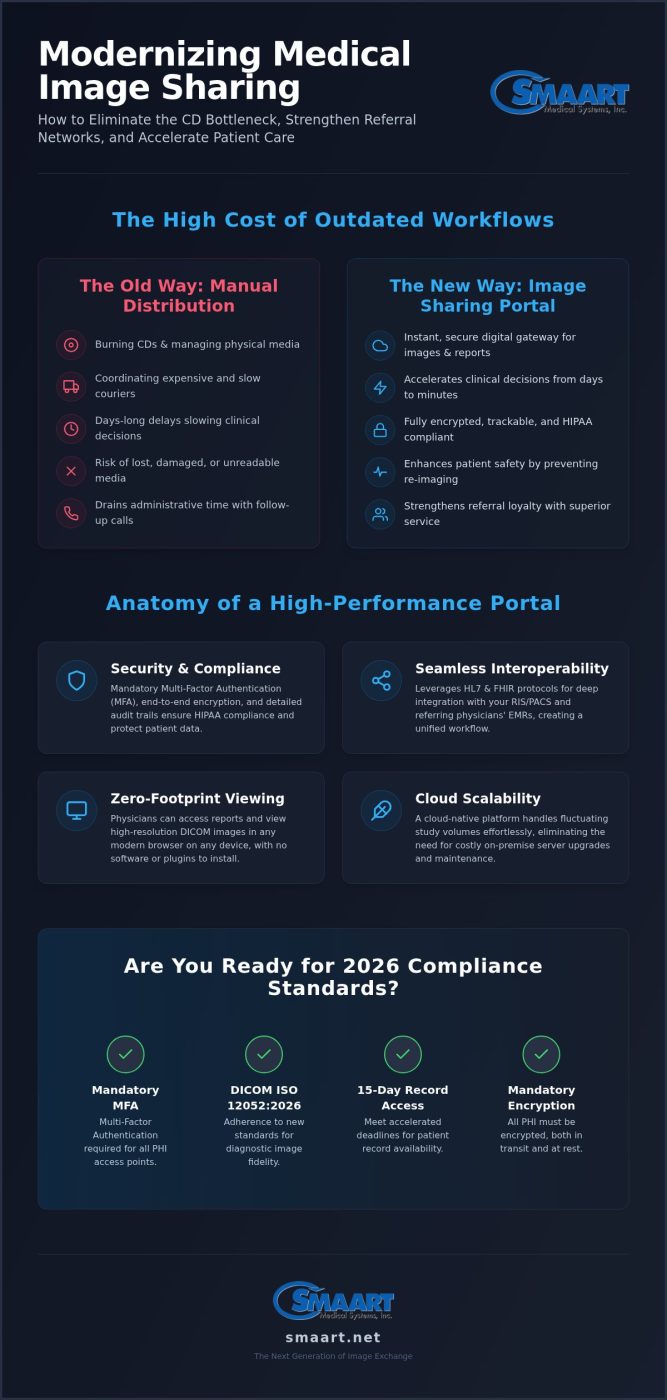
The “CD bottleneck” is a massive drain on your operational efficiency. Consider the manual steps: burning the disc, printing labels, verifying patient identity, and coordinating couriers. These tasks consume hours of administrative staff time every week. Even worse, physical media is prone to failure or loss. When a CD doesn’t work or gets lost in transit, it forces a choice between delayed care or unnecessary re-imaging. This isn’t just a cost issue; it’s a patient safety concern. Modern medical image sharing eliminates these variables by ensuring the data is always accessible. By digitizing this process, you remove the “hidden tax” on your staff and the frustration of referring offices waiting for a delivery that might never arrive.
Meeting Modern Physician Expectations in 2026
Clinical workflows in 2026 are mobile-first and browser-centric. Physicians expect to review results on tablets between patient consults, not hunt for a workstation with an obsolete disc drive. “Instant” is no longer a luxury; it’s the new baseline for diagnostic turnaround. A referring physician image sharing portal bridges the gap between your imaging center and the external EMR, creating a seamless flow of information. With the 2026 HIPAA updates requiring multi-factor authentication (MFA) and mandatory encryption for all PHI in transit, a secure portal is the only way to remain compliant while meeting these speed demands. By removing the friction of manual transfers, you provide the high-tier service levels that modern practices demand. This shift toward zero-footprint accessibility ensures your facility remains the preferred provider in a competitive market.
The Anatomy of a Modern Image Sharing Portal: Security and Interoperability
A high-performing referring physician image sharing portal must handle complex diagnostic data without burdening the end user. It starts with full DICOM compatibility, specifically adhering to the ISO 12052:2026 standard. This ensures that high-resolution images from any modality are rendered accurately. Cloud scalability is equally vital. It allows your facility to manage fluctuating study volumes without investing in expensive on-site server upgrades. Interoperability serves as the backbone of this system. By leveraging HL7 and FHIR protocols, the portal can communicate directly with external EMRs. This connection ensures that reports and images are available exactly where the physician already works, reducing the need to toggle between different software applications.
Security protocols have evolved significantly. In 2026, multi-factor authentication (MFA) is no longer an option; it’s a mandatory requirement for all access points containing protected health information. Every interaction within the portal must generate a detailed audit trail. These logs track who viewed which exam, the specific time of access, and any actions taken. This level of transparency is essential for maintaining compliance and protecting patient privacy. If you’re evaluating how to upgrade your current infrastructure, exploring modern cloud-based sharing tools can help you identify the right security balance for your network.
Zero-Footprint Viewing: Access Without Installation
Traditional imaging software often requires local installations or proprietary plugins, which create significant hurdles for IT departments in referring offices. Modern portals solve this by using zero footprint PACS viewers. This technology renders the images on the server side and streams them directly to a web browser. It removes the need for local data storage and ensures that referring doctors get diagnostic-quality viewing on tablets, mobile devices, and standard workstations. It’s a fast, efficient way to provide access without technical friction.
Data Sovereignty and HIPAA Compliance in the Cloud
Moving imaging data to the cloud requires a clear understanding of the shared responsibility model. Your facility must ensure that a comprehensive Business Associate Agreement (BAA) is in place to cover all aspects of image exchange. You remain responsible for access management, while the cloud provider secures the underlying infrastructure. In 2026, HIPAA-compliant image sharing requires mandatory end-to-end encryption for PHI both at rest and in transit across all network layers. This standard ensures that patient data remains unreadable to unauthorized parties, even if intercepted during transmission.
Cloud-Based Portals vs. Manual Distribution: A Strategic Cost Analysis
Switching from physical distribution to a digital model reveals significant financial relief. Traditional on-premise servers come with a heavy tail of costs, including hardware maintenance, cooling, and physical security. In contrast, a cloud-based referring physician image sharing portal operates on a subscription model. This shift transforms unpredictable capital expenditures into manageable operating expenses. Beyond the hardware, there is the “Referral Retention” ROI. Physician churn often occurs because of administrative friction. If your facility provides the most accessible portal, you secure a steady stream of referral volume that outweighs the cost of the software. It makes your clinic a preferred partner by removing the hurdles that drive doctors to competitors.
Scalability is another critical factor. Cloud-based systems grow with your clinic without requiring new physical racks or server rooms. This elasticity ensures that you only pay for what you use, protecting your bottom line during slower periods while supporting rapid expansion when needed. By automating the distribution of results, you effectively lower your radiology overhead and reallocate staff to higher-value tasks.
Eliminating Capital Expenditure with SaaS Models
The transition to Software-as-a-Service (SaaS) removes the financial burden of owning and depreciating hardware. You no longer need to worry about expensive “forklift upgrades” every few years. By utilizing affordable medical imaging storage, clinics can protect their margins while staying technologically current. This model also reduces the need for specialized on-site IT staff to manage complex server clusters. Your software stays updated automatically, ensuring you always have the latest security patches without manual intervention.
Workflow Efficiency Gains for Radiology Staff
Automation is the primary driver of overhead reduction. A modern referring physician image sharing portal can be configured to automatically “push” studies and reports to the physician’s account the moment the radiologist signs off. This eliminates the need for staff to manually upload files or burn discs. It also drastically reduces inbound phone calls. When referring offices have instant access to status updates and report copies, they don’t need to call your front desk. Additionally, these portals streamline the comparison of prior exams. Radiologists can access historical data from the cloud in seconds; this ensures faster, more accurate interpretations without the lag of fetching data from local archives.
Best Practices for Implementing a Physician Portal and Ensuring High Adoption
Successful implementation of a referring physician image sharing portal requires more than just technical deployment; it demands a cultural shift within your network. You need to select a platform that mirrors the efficiency of integrated RIS PACS solutions. This ensures the transition feels like an upgrade, not a chore. When software aligns with existing diagnostic routines, adoption happens naturally. Position the portal as a value-added service during your regular outreach. It isn’t just a tool; it’s a commitment to faster patient care and reduced administrative friction for their staff.
Gathering feedback is essential for long-term success. Ask your high-volume referrers what they like and what slows them down. This proactive approach shows you’re a partner invested in their success. To see how these workflows look in practice, you can explore our scalable sharing platforms to find the right fit for your facility.
The ‘Digital Front Door’ Strategy
Modernize the entry point. Don’t force users to remember complex URLs. Use secure, one-click links in email notifications or QR codes printed on physical reports for those still transitioning. This “digital front door” approach makes the referring physician image sharing portal the primary touchpoint for engagement. For a truly cohesive experience, integrate this system with your patient portal for medical images. When both the patient and the doctor use a unified ecosystem, communication is clearer and data remains centralized.
Overcoming Resistance to Change
Resistance is often born from the fear of lost time. Address this by identifying “Physician Champions” within large practice groups. These tech-forward doctors advocate for the portal’s benefits to their peers, making the change feel peer-led rather than administrative. Instead of handing out thick manuals, provide 90-second video tutorials that cover specific tasks like viewing a report or downloading a study. Keep it simple. Verify the availability of technical support for after-hours reviews. When a doctor reviews a case late at night and hits a snag, immediate assistance ensures they don’t revert to asking for a CD the next morning. Relief comes from knowing the system works when they need it most.
Elevating Care with SMAART-SHARE: The Next Generation of Image Exchange
SMAART-SHARE represents the culmination of modern imaging needs, moving beyond simple storage to active clinical engagement. As a dedicated referring physician image sharing portal, it serves as the final piece in a high-efficiency radiology environment. It allows you to move past the logistical headaches of physical media and embrace a model where diagnostic data flows instantly. The platform enables real-time collaborative viewing, allowing radiologists and referring MDs to consult on the same study simultaneously from different locations. This capability turns a standard report into a dynamic clinical discussion, improving the accuracy of the final diagnosis and the speed of treatment planning.
Integration is the core strength of our ecosystem. SMAART-SHARE works in perfect harmony with SMAART-PACS and SMAART-RIS, creating a unified workflow that requires no redundant data entry. This interoperability ensures that your center remains future-proof as standards evolve toward 2026 requirements, including mandatory multi-factor authentication and enhanced encryption. By choosing a system designed for scalability, you protect your investment and ensure your facility remains a leader in diagnostic service levels. It’s about providing the relief of a system that just works, allowing you to focus on patient outcomes rather than IT troubleshooting.
Affordability Meets Full-Feature Performance
SMAART Medical Systems, Inc. prioritizes reducing the operational burdens that often come with high-priced industry giants. We’ve built a vendor-neutral platform that integrates with existing EMR and HIS setups without requiring proprietary hardware. This fiscal responsibility allows clinics to maintain high margins while providing elite-level technology to their partners. SMAART-SHARE delivers a secure, cloud-based environment that combines clinical depth with the financial relief of a predictable, scalable cost structure.
Next Steps: Modernizing Your Referral Network
Transitioning to a digital exchange model starts with understanding your current inefficiencies. We recommend assessing your monthly spending on disc media, courier fees, and the staff hours lost to manual distribution. Once you see the numbers, the path forward becomes clear. Seeing the referring physician image sharing portal in action allows you to experience the speed of zero-footprint viewing firsthand and understand how it fits your specific clinic volume. Request a personalized SMAART-SHARE walkthrough today to start strengthening your referral network with the next generation of image exchange.
Modernizing Your Imaging Network for 2026 and Beyond
Transitioning to a digital exchange model isn’t just a technical upgrade; it’s a strategic necessity. By eliminating the manual burden of CDs, your facility gains immediate operational relief and strengthens relationships with your referral network. A high-performance referring physician image sharing portal ensures that diagnostic data is accessible exactly when and where it’s needed. This shift accelerates clinical decision-making and positions your center as a modern, efficient partner. You can finally move past the friction of physical media and focus on delivering exceptional patient care.
Embracing cloud-based image mobility and seamless EMR/HIS integration allows you to meet strict 2026 security standards without the heavy costs of legacy hardware. SMAART-SHARE provides these advanced capabilities through affordable SaaS pricing models that scale with your growth. You don’t have to navigate these complexities alone. Streamline your referral workflow with SMAART-SHARE and experience the benefits of a truly unified radiology environment. We’re here to help you build a more responsive, patient-centered practice today.
Frequently Asked Questions
What is a referring physician image sharing portal?
A referring physician image sharing portal is a secure, web-based gateway that allows doctors to access their patients’ radiology images and reports instantly. It replaces manual distribution methods like CDs or printed films. By using a cloud-based platform like SMAART-SHARE, physicians can review high-resolution DICOM files from any location with an internet connection. This digital bridge speeds up clinical decisions and improves the overall service levels of your imaging facility.
How does a cloud-based portal ensure HIPAA compliance during image exchange?
Cloud-based portals maintain compliance by implementing mandatory multi-factor authentication (MFA) and end-to-end encryption for all data at rest and in transit. In 2026, these safeguards are no longer addressable; they’re strictly required. Systems like SMAART-SHARE also provide comprehensive audit trails that track every user interaction. This ensures that only authorized personnel view protected health information, while annual vendor verification confirms that all security protocols meet current federal standards.
Can referring physicians view images on their mobile devices?
Yes, modern portals are designed for mobile-first workflows, allowing doctors to review exams on tablets and smartphones. This accessibility is achieved through zero-footprint viewing technology, which renders images on the server rather than the device. Physicians can securely check results between patient consults or while on rounds without sacrificing diagnostic quality. It’s a critical feature for centers looking to provide the high level of convenience that modern clinical practices demand.
Do referring physicians need to install special software to use the portal?
No, a modern referring physician image sharing portal operates entirely within a standard web browser. This zero-footprint approach eliminates the need for local software installations or proprietary plugins, which often cause IT headaches for external offices. Referring staff simply log in through a secure link to view reports and images. This lack of technical friction is a primary driver for high adoption rates among busy medical practices.
How does an image portal integrate with my existing RIS or PACS?
The portal connects to your existing infrastructure using standard interoperability protocols like HL7 and FHIR. Platforms such as SMAART-SHARE are designed to bridge the gap between SMAART-PACS or SMAART-RIS and external clinical systems. This integration automates the “push” of finalized studies to the physician’s account. It ensures that data remains synchronized across all platforms, reducing manual entry errors and providing a unified workflow for your administrative team.
What happens if a referring physician needs to download DICOM files for their own system?
Physicians can easily download full DICOM datasets if they need to import the studies into their own local PACS or surgical planning software. The portal provides secure download options that maintain the integrity of the original metadata and high-resolution image quality. This flexibility allows your partners to work within their preferred clinical environment. It ensures your facility supports the diverse technical requirements of specialists, from orthopedic surgeons to oncology groups.
How much does it cost to implement a referral portal for a small clinic?
Implementation costs vary based on your study volume and specific integration needs, but cloud-based models generally offer significant financial relief. By moving to a SaaS subscription like SMAART-SHARE, you avoid the heavy capital expenditure of purchasing and maintaining on-site servers. This predictable monthly cost structure helps small clinics manage their margins effectively. You’ll also see indirect savings from reduced staff hours spent on burning and mailing physical CDs.
Can patients also use the same portal to see their radiology results?
While the physician portal is optimized for clinical workflows, it can be integrated with a dedicated patient portal to provide a cohesive experience. Patients can access their own results through a secure, patient-facing interface that meets the 2026 15-day record access deadlines. This centralization ensures that both the doctor and the patient are looking at the same finalized data. It simplifies communication and empowers patients to take a more active role in their healthcare journey.